

Selecting the right dump truck types for heavy duty operations is a critical decision that impacts productivity, operational efficiency, and return on investment across construction, mining, and large-scale infrastructure projects. Heavy duty dump trucks must withstand extreme loads, harsh working conditions, and continuous operation cycles while delivering reliable performance over extended service periods. Understanding which dump truck types align with specific operational demands requires examining payload capacity, chassis configuration, dump mechanism design, and application-specific engineering features that separate industrial-grade equipment from general-purpose vehicles.
The suitability of different dump truck types for heavy duty work depends on several interconnected factors including axle configuration, gross vehicle weight rating, engine power output, transmission robustness, and body design characteristics. For operations involving 40-ton payloads or higher, specific dump truck types demonstrate superior performance through reinforced structural engineering, enhanced braking systems, and power train configurations optimized for continuous heavy hauling. This comprehensive analysis examines the most suitable dump truck types for demanding industrial applications, providing decision-makers with practical criteria for equipment selection based on operational requirements, site conditions, and long-term performance expectations.
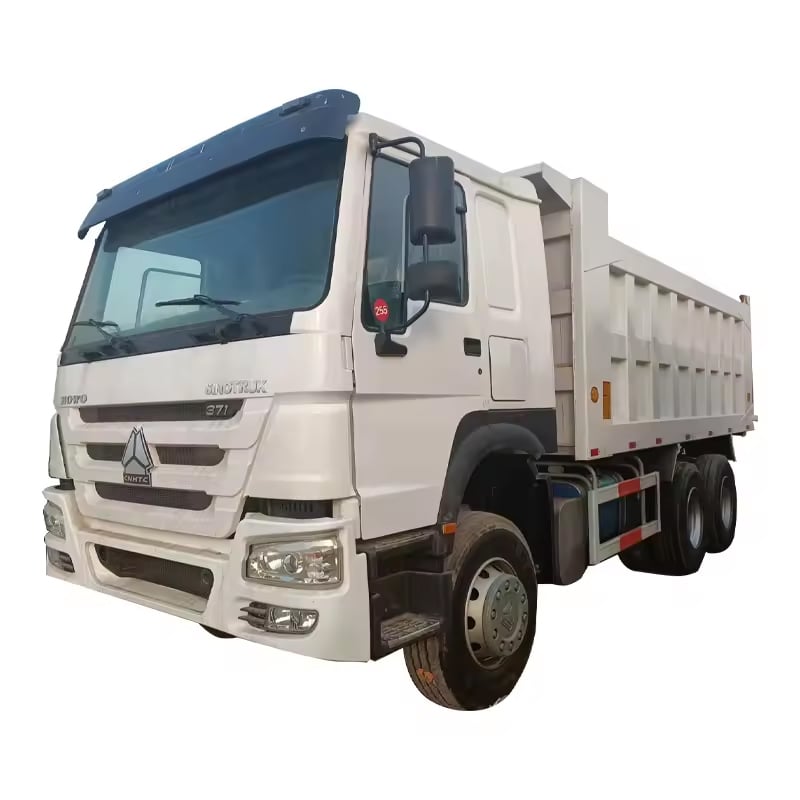
The foundation of heavy duty dump truck types begins with axle configuration, which directly determines load distribution, traction capability, and legal weight compliance. The 6x4 configuration represents one of the most prevalent dump truck types for heavy duty operations, featuring six wheels with four driven wheels that provide optimal balance between payload capacity and maneuverability. This configuration typically supports gross vehicle weights ranging from 40 to 50 tons, making it suitable for mining operations, large construction projects, and bulk material transport where maximum legal road weight is required.
Among dump truck types designed for extreme heavy duty applications, the 8x4 configuration offers enhanced load distribution across four axles with eight wheels total. This setup increases the gross vehicle weight rating to 60 tons or higher while maintaining road legality through better weight distribution across additional contact points. The extra axle provides improved stability when traversing uneven terrain typical of quarry and mining environments, reducing stress on individual suspension components and extending service intervals between major maintenance operations.
For operations requiring maximum payload without compromising mobility, certain dump truck types incorporate tandem rear axles with differential locking mechanisms. This engineering approach ensures power delivery to all driven wheels even when traction conditions vary across the contact surface, preventing wheel spin and maintaining forward momentum in muddy, rocky, or steep gradient situations. The selection between different axle configurations among dump truck types should account for typical load weights, site access conditions, and regulatory weight restrictions in operational jurisdictions.
Heavy duty dump truck types distinguish themselves through chassis frame construction that employs high-tensile steel alloys and reinforced cross-member designs. The frame must resist torsional stress during uneven terrain traversal while supporting static and dynamic loads that exceed 40 tons during loaded operation. Premium dump truck types utilize ladder-frame construction with variable thickness sections, placing thicker material in high-stress zones around suspension mounting points, fifth-wheel connections, and body hinge locations.
Advanced dump truck types incorporate finite element analysis during design phases to identify stress concentration points and optimize material distribution without adding unnecessary weight. This engineering approach creates frames that achieve strength-to-weight ratios superior to conventional designs, allowing payload capacity increases without proportional chassis weight penalties. The frame rail depth and width dimensions in heavy duty dump truck types typically exceed those of lighter commercial vehicles by 30 to 50 percent, providing the structural rigidity necessary for maintaining alignment and preventing frame fatigue under continuous heavy loading cycles.
Corrosion resistance represents another critical consideration when evaluating dump truck types for long-term heavy duty service. Frames exposed to mining chemicals, road salt, or coastal environments benefit from hot-dip galvanization or advanced coating systems that penetrate frame cavities and provide comprehensive protection. Some dump truck types feature stainless steel fasteners and zinc-rich primer applications in vulnerable areas, extending operational life in corrosive environments by five to seven years compared to standard protective treatments.
Engine power output separates heavy duty dump truck types from medium-duty alternatives, with industrial applications typically requiring 370 to 430 horsepower to maintain acceptable performance under full payload conditions. Turbocharged diesel engines with intercooling systems deliver the torque characteristics necessary for loaded acceleration and grade climbing, with peak torque figures ranging from 1,800 to 2,200 Newton-meters depending on displacement and turbocharger specifications. These power levels enable loaded dump truck types to maintain highway speeds on moderate grades and achieve acceptable cycle times in off-highway applications.
Transmission selection among heavy duty dump truck types involves choosing between manual, automated manual, and fully automatic systems based on operator skill levels and operational efficiency priorities. Manual transmissions with 10 to 16 forward gears provide maximum driver control and typically demonstrate superior fuel efficiency in experienced hands, making them preferred choices for dump truck types operating in predictable route patterns. Automated manual transmissions offer compromise solutions that retain mechanical efficiency while reducing operator fatigue during extended shifts, with shift logic programming optimized for heavy load conditions.
The integration between engine management systems and transmission control units in modern dump truck types enables adaptive shift patterns that respond to load weight, gradient angle, and throttle input. This coordination prevents premature gear engagement that could stall the engine under heavy load and optimizes power delivery throughout the operational range. Some advanced dump truck types incorporate GPS-based terrain recognition that pre-selects appropriate gears based on upcoming road conditions, reducing unnecessary shifting and improving fuel economy by three to five percent in varied terrain applications.
Among dump truck types suitable for heavy duty operations, the standard rear-dump tipper body remains most prevalent due to its simplicity, reliability, and efficient material discharge characteristics. These bodies typically feature rectangular cross-sections with vertical or slightly sloped sides that maximize volumetric capacity while maintaining structural integrity under impact loading from excavator buckets and wheel loaders. Body volumes for heavy duty applications range from 15 to 25 cubic meters, designed to optimize payload weight utilization without exceeding legal height restrictions during transport.
The hydraulic lifting system represents a critical component differentiating heavy duty dump truck types from lighter alternatives. Single-stage telescopic cylinders with bore diameters exceeding 200 millimeters provide lifting forces sufficient to elevate 40-ton payloads to discharge angles between 50 and 60 degrees. Premium dump truck types incorporate flow-control valves that regulate descent speed, preventing sudden drops that could damage chassis components or create safety hazards in congested work areas. The mounting position of hydraulic cylinders affects stability during the dump cycle, with front-mounted designs offering better weight distribution than under-body configurations.
Body material selection among heavy duty dump truck types involves balancing durability requirements against tare weight considerations. High-strength steel bodies with thickness ranging from 6 to 10 millimeters provide excellent abrasion resistance for rock and ore hauling applications, accepting impact damage without cracking or permanent deformation. Some dump truck types targeting aggregate and coal transport utilize lighter gauge steel with internal reinforcing ribs that achieve acceptable durability at reduced weight, allowing increased payload within gross vehicle weight limits. The body floor typically receives thicker material or hardened steel plates in high-wear zones where material impact concentrates during loading operations.
Certain dump truck types incorporate specialized body designs optimized for particular material characteristics and discharge requirements. Side-dump bodies suit applications requiring precise material placement along narrow corridors or against structures where rear discharge proves impractical. These dump truck types utilize laterally-mounted hydraulic cylinders that rotate the body 90 degrees to either side, enabling material discharge without repositioning the entire vehicle. The mechanical complexity and additional maintenance requirements of side-dump mechanisms limit their adoption to applications where operational benefits justify the increased equipment investment and service costs.
Half-pipe or U-shaped body profiles appear on dump truck types designed for light, bulky materials such as wood chips, municipal waste, or agricultural products. The curved body sides shed material more effectively during discharge compared to vertical-sided alternatives, reducing residue that increases tare weight and contaminates subsequent loads. These body profiles sacrifice some volumetric efficiency compared to rectangular sections but demonstrate superior discharge characteristics for materials with high internal friction angles that resist gravity flow.
For heavy duty dump truck types operating in mining environments with extremely abrasive materials, some manufacturers offer bodies with replaceable wear liners constructed from hardened steel alloys or composite materials. These liners protect the structural body shell from direct material impact, extending service life by three to five years in severe applications. The liner system adds initial equipment cost but proves economical through reduced body replacement frequency and maintained payload capacity as wear progresses. Installation typically involves bolt-through connections that allow field replacement without specialized welding equipment or extended downtime.
Tailgate configuration significantly influences discharge characteristics and operational versatility across different dump truck types. Heavy duty applications typically employ full-width tailgates with multi-point latching systems that distribute closing forces across the entire gate width, preventing warping under repeated impact from loaded material. Some dump truck types feature hydraulically-actuated tailgates that eliminate manual latching operations, improving operator safety and reducing cycle times in high-frequency hauling operations where multiple dumps occur per shift.
The incorporation of material control features distinguishes premium heavy duty dump truck types from basic configurations. Sliding tailgate extensions increase effective body length by 500 to 800 millimeters, allowing overfill capacity for lightweight materials while maintaining legal transport dimensions. These extensions retract during material discharge, enabling complete body evacuation without material hangup on the tailgate upper edge. Adjustable tailgate opening angles provide discharge rate control useful when placing materials in confined areas or preventing damage to underlying surfaces from excessive material velocity.
Some advanced dump truck types incorporate electronic tailgate monitoring systems that indicate latch status to operators through cab-mounted displays, preventing travel with unsecured gates that create safety hazards and material loss. Integration with vehicle management systems can prevent movement until proper tailgate closure confirmation occurs, enforcing operational protocols in multi-operator fleet environments. These monitoring systems typically utilize proximity sensors or mechanical switches at each latch point, providing redundant verification that reduces gate-related incidents by over 90 percent compared to visual-only verification methods.
Heavy duty dump truck types require braking systems engineered to arrest vehicles with gross weights exceeding 50 tons across varied terrain and grade conditions. Dual-circuit air brake systems with separate front and rear circuits provide redundancy that maintains partial braking capability even if one circuit fails, meeting regulatory requirements for heavy commercial vehicles. Brake chamber sizing in these dump truck types typically exceeds 30 square inches of effective area per wheel position, generating sufficient clamping force to achieve acceptable stopping distances under maximum load conditions.
Engine compression braking systems, commonly called engine brakes or retarders, significantly extend service brake life in dump truck types operating in mountainous terrain or applications involving frequent descents. These systems convert the engine into an air compressor during deceleration, generating substantial retarding force without friction component wear. Heavy duty dump truck types often incorporate exhaust brake valves that work synergistically with compression release mechanisms, achieving combined retarding power equivalent to 300 to 400 horsepower at highway speeds. This supplementary braking capacity reduces foundation brake temperatures by 40 to 60 percent during extended descents, preventing brake fade and reducing lining replacement frequency.
Anti-lock braking systems have become standard features on modern heavy duty dump truck types, preventing wheel lockup during emergency braking and maintaining directional stability on mixed-traction surfaces. The electronic control modules in these systems monitor individual wheel speeds and modulate brake pressure up to 10 times per second, optimizing stopping performance across varying load conditions and surface characteristics. Some premium dump truck types incorporate electronic stability control that extends beyond basic anti-lock functionality, detecting potential rollover conditions and selectively applying brakes to individual wheels while reducing engine power to maintain vehicle stability during evasive maneuvers.
Suspension engineering in heavy duty dump truck types must balance load-carrying capability with acceptable ride quality that prevents cargo damage and reduces operator fatigue. Multi-leaf spring packs remain common in these applications due to their load-bearing capacity, progressive spring rate characteristics, and field-serviceable design. Heavy duty configurations typically employ spring packs with 12 to 16 leaves and overall thickness exceeding 100 millimeters, providing load capacity margins of 20 to 30 percent above rated payload to accommodate occasional overloading without permanent spring set.
Air suspension systems appear on premium dump truck types targeting mixed-use applications that include significant highway travel between work sites. These systems automatically adjust ride height based on load weight, maintaining consistent frame height and optimizing approach and departure angles regardless of payload. The inherent damping characteristics of air springs provide superior ride quality compared to steel leaf springs, reducing vibration transmission to the chassis and cargo area. However, the complexity and maintenance requirements of air suspension systems typically limit their adoption to dump truck types operating primarily on improved road surfaces rather than severe off-highway environments.
Shock absorber sizing and valving significantly influence ride quality and load security across different dump truck types. Heavy duty applications require shock absorbers with larger cylinder bores and fluid capacities compared to passenger vehicles, dissipating the greater kinetic energy generated by higher unsprung masses and rougher operating surfaces. Premium dump truck types incorporate gas-charged shock absorbers with remote reservoirs that maintain consistent damping performance even under sustained high-temperature operation. The damping characteristics typically feature asymmetric valving with greater resistance during compression than rebound, controlling body motion during severe impacts without creating harsh ride quality during normal operation.
Fuel consumption represents a substantial operational cost component for heavy duty dump truck types, with typical figures ranging from 35 to 50 liters per 100 kilometers depending on load conditions, terrain, and operational patterns. Aerodynamic refinement provides limited fuel economy benefits for dump truck types operating primarily in off-highway environments at low speeds, but vehicles with significant highway exposure benefit from cab roof fairings and side skirt installations that reduce aerodynamic drag by 10 to 15 percent at highway speeds.
Engine efficiency characteristics vary significantly among heavy duty dump truck types based on emission control technology generations and displacement strategies. Modern common-rail diesel injection systems with injection pressures exceeding 2,000 bar enable precise fuel metering across operating ranges, improving combustion efficiency and reducing fuel consumption by five to eight percent compared to mechanical injection systems. Some dump truck types incorporate cylinder deactivation technology that operates on reduced cylinder counts during light-load cruising, further improving fuel economy during empty return trips that constitute 40 to 50 percent of typical hauling cycles.
Transmission efficiency differences among dump truck types influence overall fuel consumption through parasitic power losses within the drivetrain. Manual transmissions typically demonstrate one to three percent better fuel efficiency compared to automatic alternatives due to direct mechanical coupling without torque converter slip losses. However, automated manual transmissions largely eliminate this efficiency penalty while providing operational benefits of automatic shifting, making them increasingly popular in heavy duty dump truck types where fuel costs justify premium transmission investment.
Heavy duty dump truck types manufactured for markets with stringent emission regulations incorporate sophisticated exhaust aftertreatment systems that reduce particulate matter and nitrogen oxide emissions to regulatory limits. Selective catalytic reduction systems inject diesel exhaust fluid into the exhaust stream, converting nitrogen oxides into harmless nitrogen and water vapor through catalytic reaction. These systems require periodic DEF replenishment, adding operational complexity but enabling dump truck types to meet Euro V, Euro VI, or equivalent emission standards without significant power or fuel economy penalties.
Diesel particulate filters capture soot particles from exhaust gases, requiring periodic regeneration cycles that burn accumulated material at elevated temperatures. Heavy duty dump truck types operating in continuous high-load applications typically achieve passive regeneration through normal exhaust heat, while vehicles with frequent idle periods or short-haul cycles may require active regeneration using supplementary fuel injection. The regeneration process temporarily increases fuel consumption by three to five percent, factoring into total operational cost calculations for different duty cycles.
Some jurisdictions impose operational restrictions on heavy duty dump truck types based on engine age or emission certification levels, limiting access to urban areas or imposing additional taxation on older vehicles. Fleet operators must consider these regulatory trends when selecting dump truck types for long-term service, balancing initial purchase costs against potential operational restrictions that could diminish vehicle utility before mechanical end-of-life. The residual value of emission-compliant dump truck types typically exceeds non-compliant alternatives by 20 to 40 percent, partially offsetting higher initial acquisition costs through improved resale performance.
Noise generation from heavy duty dump truck types affects operational acceptability in urban construction sites and residential areas with restrictive sound ordinances. Engine noise represents the primary source, with modern dump truck types incorporating improved exhaust muffler designs and acoustic engine enclosures that reduce exterior sound levels by eight to 12 decibels compared to older generations. Turbocharger whistling and air intake noise receive attention through resonator installations and sound-deadening materials in air intake routing.
Hydraulic system noise during dump cycles creates secondary sound emissions that some municipalities regulate separately from propulsion noise. Premium dump truck types incorporate accumulator circuits that dampen pressure pulsations and reduce pump cavitation, lowering operational noise by four to six decibels during body raising and lowering operations. Hydraulic tank placement and mounting isolation further reduce noise transmission to the chassis and surrounding environment, improving dump truck types' acceptability in noise-sensitive locations.
Tire selection influences rolling noise generation, with some heavy duty dump truck types specifying low-noise tread patterns for mixed urban-rural operations. These tread designs sacrifice some traction performance in loose material compared to aggressive lug patterns but demonstrate eight to 10 decibel reductions in passby noise levels on paved surfaces. Fleet operators must balance traction requirements against noise restrictions when selecting tire specifications for dump truck types serving diverse operational environments.
Heavy duty dump truck types must comply with axle weight regulations that protect road infrastructure from excessive loading. The distribution of gross vehicle weight across multiple axles determines legal payload capacity, with regulations typically limiting individual axle loads to 10 to 13 tons depending on jurisdiction. Proper load distribution becomes critical, as uneven material placement within the dump body can concentrate weight on specific axles, creating compliance violations even when gross vehicle weight remains within legal limits.
Some advanced dump truck types incorporate onboard weighing systems that monitor individual axle loads in real-time, alerting operators to distribution problems before leaving loading sites. These systems utilize pressure sensors in air suspension components or strain gauges mounted to frame rails, calculating load distribution with accuracy typically within two to three percent of static scale measurements. The integration of weighing systems prevents overload violations that result in fines and reduces road wear that damages public infrastructure and creates negative community relations.
Bridge formula compliance represents another regulatory consideration affecting route selection for heavy duty dump truck types. These formulas establish maximum gross weight based on axle spacing and total wheelbase length, with longer vehicles permitted greater gross weights due to improved load distribution over extended distances. Understanding these regulations influences chassis specification decisions, as dump truck types with longer wheelbases may offer legal payload advantages in specific jurisdictions despite potentially reduced maneuverability in confined work sites.
Optimal productivity in heavy duty applications requires matching dump truck types to available loading equipment capabilities and cycle time targets. Excavators and wheel loaders exhibit specific bucket capacities and cycle times that determine ideal truck body volumes for minimizing wait times at loading points. A common industry guideline suggests matching truck capacity to achieve loading completion within three to five bucket passes, balancing loading efficiency against excessive truck size that creates maneuverability problems or utilization inefficiencies.
For operations utilizing 5-cubic-meter excavator buckets, dump truck types with 20 to 25 cubic meter body volumes typically provide optimal matching. Smaller trucks require more frequent loading cycles that tie up excavator productive time, while excessively large trucks experience extended loading periods that reduce overall fleet productivity. The bulk density of hauled materials significantly affects this calculation, with heavy materials like iron ore requiring smaller volume bodies to remain within weight limits compared to light materials like coal or mulch that can utilize full volumetric capacity.
Loading height compatibility represents another critical matching consideration between excavator reach capabilities and dump truck types. Standard heavy duty configurations feature body rail heights between 2,800 and 3,200 millimeters, requiring excavators with corresponding reach envelopes for efficient overhead loading. Operations using smaller excavators or wheel loaders may benefit from dump truck types with lowered chassis specifications or reduced tire diameters that lower loading heights by 300 to 500 millimeters, enabling complete body filling without equipment strain or safety concerns from excessive reach angles.
The economic viability of different dump truck types varies significantly based on typical haul distances and required cycle frequencies. Short-haul applications with distances under three kilometers favor maximum payload capacity within legal limits, as transport time represents a smaller proportion of total cycle time compared to loading and dumping operations. These operations benefit from dump truck types optimized for load capacity rather than highway speed capability, potentially accepting lower horsepower-to-weight ratios that reduce acquisition and operating costs.
Medium-haul operations spanning five to 15 kilometers require dump truck types with balanced specifications that provide adequate payload capacity while maintaining highway speeds between loading and discharge points. These applications justify premium power train investments that deliver 10 to 15 percent faster cycle times through superior acceleration and grade-climbing performance. The fuel consumption penalties of higher power outputs become acceptable when offset by increased daily trip counts that improve equipment utilization and revenue generation per operating day.
Long-haul dump truck types serving distances exceeding 20 kilometers prioritize highway performance, operator comfort, and fuel efficiency characteristics that reduce per-ton-kilometer transport costs. These specifications may sacrifice some ultimate payload capacity in favor of aerodynamic refinement, comfortable suspension tuning, and fuel-optimized power train calibrations. The economic analysis shifts toward minimizing hourly operating costs rather than maximizing single-trip payload, as labor and fuel expenses dominate total cost structures in long-distance hauling operations.
Operating surface conditions significantly influence appropriate dump truck types selection, with severe off-highway applications requiring enhanced traction systems and durability features. All-wheel-drive configurations provide superior performance in loose, muddy, or steep terrain compared to 6x4 rear-drive alternatives, distributing tractive effort across all wheel positions and reducing individual tire slip. These dump truck types typically cost 15 to 25 percent more than rear-drive equivalents but prove essential in mining, logging, and construction sites with minimal surface preparation or seasonal weather challenges.
Differential locking systems enhance traction capabilities across various dump truck types by forcing equal rotational speed between axle ends or between front and rear axles. Automatic locking differentials engage when wheel speed differences exceed predetermined thresholds, providing traction benefits without requiring operator intervention. Manual locking systems offer maximum control but depend on operator awareness and proper engagement timing, potentially allowing vehicle immobilization if not activated promptly when traction loss begins.
Tire selection profoundly affects traction performance and operational costs across different dump truck types. Aggressive lug patterns with deep tread voids provide superior traction in soft or loose materials but accelerate wear on paved surfaces and generate excessive road noise. Mixed-service tread designs compromise between on-road longevity and off-road traction, suiting dump truck types operating in varied conditions. Tire pressure management systems enable field adjustment of inflation pressures to optimize contact patch characteristics for prevailing surface conditions, improving traction and reducing surface disturbance in environmentally sensitive work areas.
Heavy duty dump truck types operating in mining applications typically achieve service lives between seven and 12 years or 800,000 to 1,200,000 kilometers before requiring major overhaul or replacement. Actual longevity depends heavily on maintenance quality, operational severity, and whether the vehicle operates primarily on improved haul roads or unimproved terrain. Trucks maintained according to manufacturer specifications with timely fluid changes, component inspections, and preventive part replacements generally reach the upper end of this range. Mining operations with dedicated maintenance facilities and comprehensive predictive maintenance programs often extend service lives by 20 to 30 percent compared to operations with reactive maintenance approaches. The harshness of hauled materials also influences longevity, with extremely abrasive materials like crushed rock accelerating body wear and requiring earlier replacement compared to less abrasive materials like coal or overburden soil.
The 6x4 dump truck types typically support gross vehicle weights between 40 and 50 tons with payload capacities ranging from 25 to 35 tons depending on body size and chassis tare weight. The 8x4 configuration distributes weight across an additional axle, enabling gross vehicle weights up to 65 tons with corresponding payload increases of 10 to 15 tons compared to 6x4 alternatives. The specific payload advantage depends on regulatory frameworks in operating jurisdictions, as some regions impose axle-count-based weight limits that reward additional axles with higher legal gross weights. Beyond legal payload differences, 8x4 dump truck types demonstrate superior stability during dump cycles with high-center-of-gravity loads and reduced individual tire loading that extends tire service life by 25 to 40 percent. The additional axle increases initial purchase cost by approximately 12 to 18 percent and adds maintenance complexity through extra brake components, suspension parts, and tire positions requiring service.
Hydraulic systems in heavy duty dump truck types require hydraulic fluid changes every 2,000 to 3,000 operating hours or annually, whichever occurs first, to maintain optimal performance and component longevity. Filter elements typically require replacement at half these intervals or every 1,000 to 1,500 hours to prevent contaminant accumulation that accelerates component wear. Telescopic cylinder seals generally last 4,000 to 6,000 cycles in normal service but may require earlier replacement in abrasive environments where dust and dirt contamination accelerate seal wear. Hydraulic hose assemblies warrant inspection every 500 hours for abrasion damage, weather cracking, or connection leakage, with typical replacement intervals ranging from three to five years depending on environmental exposure and operational severity. Premium dump truck types with filtration systems featuring higher Beta ratios and lower micron ratings often extend fluid change intervals by 30 to 50 percent through superior contaminant control that reduces internal component wear rates.
Most jurisdictions require commercial driver licenses with appropriate endorsements for operating heavy duty dump truck types on public roadways, with specific license classifications based on gross vehicle weight ratings. Vehicles exceeding 26,000 pounds gross weight typically require Class B commercial licenses in North America, while vehicles with gross weights above 33,000 pounds may require Class A licenses depending on trailer configurations. Beyond basic licensing, many industrial operations mandate company-specific operator training that covers site safety protocols, loading procedures, dump site protocols, and equipment-specific operational characteristics. Mining and large construction operations frequently implement formal operator certification programs that include written examinations, practical skills assessments, and periodic recertification to maintain operating privileges. While not universally mandated by regulations, these internal certification programs significantly reduce incident rates and equipment damage, justifying their implementation through improved safety records and reduced insurance costs that offset training program expenses.
Copyright © 2026 Shandong TruckLink Exporters Co.,Ltd.All rights reserved.
 EN
EN
 AR
AR
 BG
BG
 HR
HR
 CS
CS
 DA
DA
 NL
NL
 FI
FI
 FR
FR
 DE
DE
 EL
EL
 HI
HI
 JA
JA
 KO
KO
 PL
PL
 PT
PT
 RO
RO
 RU
RU
 ES
ES
 TL
TL
 ID
ID
 SR
SR
 UK
UK
 VI
VI
 SQ
SQ
 TH
TH
 TR
TR
 AF
AF
 MS
MS
 HY
HY
 AZ
AZ
 KA
KA
 BN
BN
 LO
LO
 LA
LA
 MN
MN
 MY
MY
 KK
KK
 UZ
UZ
 KY
KY